
Built to Last: Lamont Engineers Homegrown Legacy
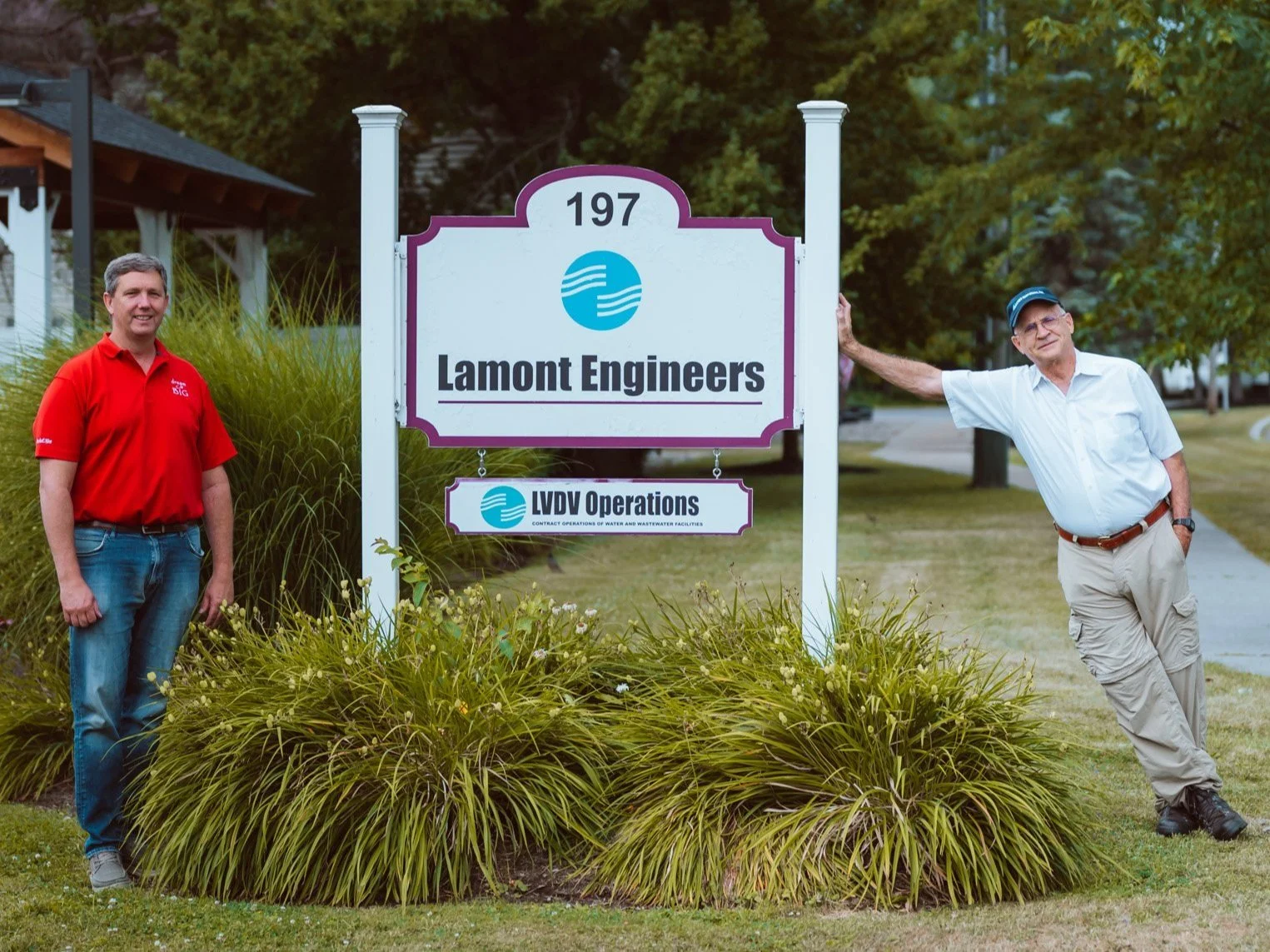
Long before CAD drawings and digital surveys, Henry Lamont’s story began on Schoharie County soil—tilled, lived on, and passed down through generations. “My family has been in this county since 1802,” Henry says. “They moved here shortly after the Revolution—first West Fulton, then Richmondville, and finally Cobleskill in the 1870s.” This deep connection to place would become the foundation of Lamont Engineers, a trusted civil engineering firm serving the region for more than four decades.
Raised among farmers and lawyers, Henry became the first engineer in his family, though the path wasn’t obvious at first. After graduating high school in 1968, he set off to study English at Hamilton College. “I had no idea where it was going to take me,” he recalls. “But the most important course I took was expository writing. In engineering, you have to explain everything clearly—to clients, agencies, regulators.”
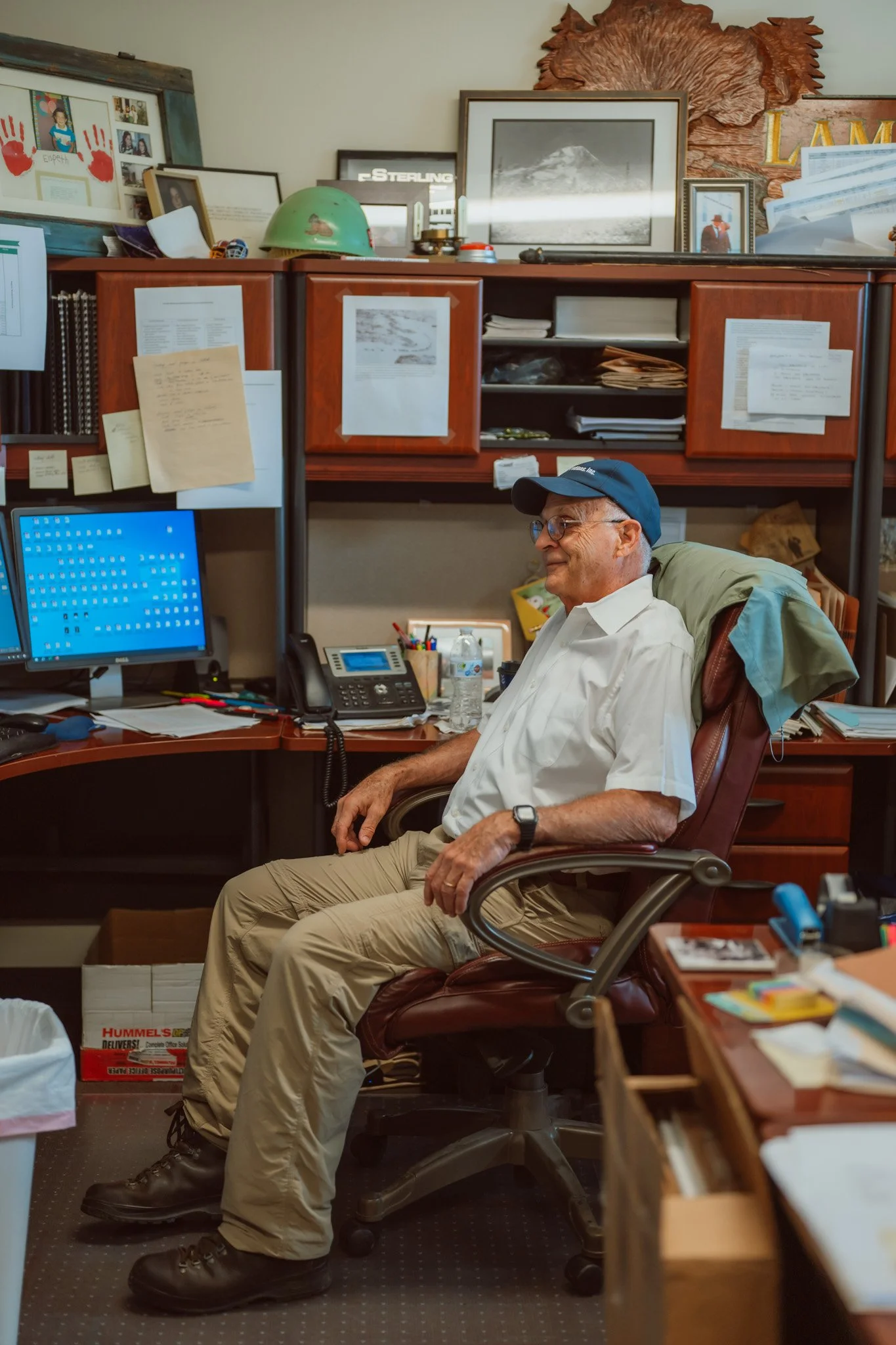
His engineering journey began under the mentorship of Rudy Snyder, a WWII veteran who had begun studying at RPI before his education was interrupted by the war. “I started as a rodman in the field,” Henry says. “I was there when we got the first distance meter. Before that, it was chains and something called transits. Rudy was forward-thinking; he saw the change coming.” Encouraged by Rudy and driven to serve his home region, Henry took refresher courses at SUNY Cobleskill and enrolled at Cornell to study civil engineering. It was at SUNY Cobleskill he met Joanne Crum—later a key figure in the Schoharie community and featured in SEEC’s Rooted series.
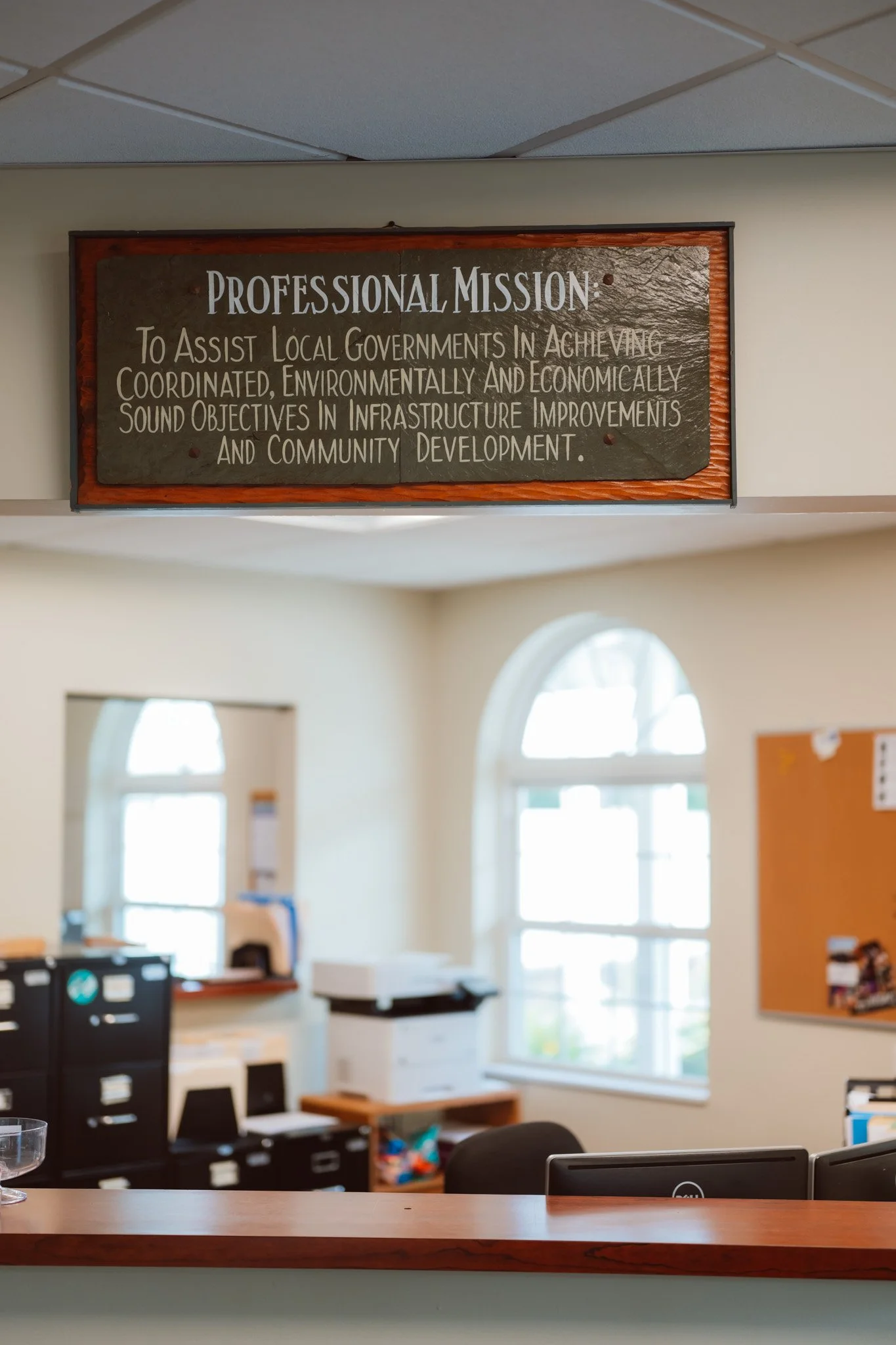
By 1980, Henry launched Lamont Engineers with a clear mission: to serve rural communities with professionalism, practicality, and integrity.
“My drafting board was in the living room,” he remembers. What began humbly grew into a regional firm providing water, wastewater, environmental, and structural engineering across upstate New York. Through every technological shift—from chain surveys to electronic distance meters—Henry’s people-centered philosophy endured: “Engineering should be practical. It should help people.
That philosophy attracted Milan Jackson, who joined the firm in 2000 and now serves as President and Principal Engineer. Milan’s early life was shaped by his father’s Air Force career, moving from Duluth, Minnesota, through Alabama, Syracuse, Canada, the Philippines, and Massachusetts before settling in Cobleskill for 10th grade. While working a summer at Howe Caverns, he crossed paths with Julie Pacatte—now SEEC’s Executive Director—foreshadowing future community collaborations. “SEEC calls on Lamont Engineers nearly every day,” remarked Pacatte. “Who knew an impish summer job would lead to building community together later in life.” Lamont Engineers is intimately involved in The Parrott House renovation and smart growth efforts at Schoharie's gateway, two initiatives that SEEC has a hand-in to advance.
After earning a civil and environmental engineering degree from Clarkson University, Milan worked in construction and land development in the D.C. area before returning home. “I was working on large projects, but it wasn’t fulfilling. I didn’t see a growth path,” he says. A former college roommate suggested Lamont Engineers, and Milan quickly rose to leadership. “I liked that it was a small firm doing important work. You’re not just designing things—you’re helping small towns solve big problems.”
Among the firm’s many projects, the Carlisle Fire Station renovation stands out. “That project was about hearing their needs and designing something that worked for them—not just checking boxes,” Milan explains. The challenge? Keeping the station fully operational during construction. His team phased work in halves, ensuring 24/7 emergency service. “It wasn’t flashy, but it was functional—and it mattered.”
Another standout project is the wastewater treatment plant at the Oorah Girl’s Zone camp in Gilboa, NY, which Lamont Engineers designed to meet exceptionally high environmental standards. “It’s one of those projects that demonstrates what can be achieved when you prioritize innovation and quality,” Milan explains. Lamont’s team designed a wastewater treatment facility capable of producing high quality effluent—so pure it meets standards that would allow it to be consumed if treated as drinking water. This advanced level of treatment required creative engineering and a deep understanding of both regulatory requirements and the camp’s operational needs.
For Henry, those values run as deep as his roots in Schoharie County. After 25 years at the helm, he stepped back in 2005, selling his shares to younger engineers, including Milan. Retirement hasn’t slowed him; Henry now pours his energy into the family farm, where he’s planted over 2,000 trees. “Some people pour money into boats,” he jokes. “I pour mine into my family’s farm.” Reflecting on his life’s journey, he smiles: “Do I feel rooted in this place? Maybe a little too much.”
Voted as one of the best places to work in the Capital Region, the firm’s work spans water systems, wastewater treatment, roads, bridges, and comprehensive planning—always balancing regulatory demands with community needs. “You have to be out in the field,” Milan says. “Designing in the office is only half the job. You have to see how things go together.” This hands-on approach shapes Milan’s mentorship, encouraging young engineers to combine technical skill with ethical judgment.
Integrity, mentorship, and quality have become hallmarks of Lamont Engineers. Milan shares advice he often gives his eldest: “There’s a huge difference between doing something right and doing the right thing.” That distinction guides his leadership and the firm’s commitment to excellence. “You can’t be the cheapest and the best,” Milan says. “We aim to be the best.”
Though retired from day-to-day operations, Henry remains deeply involved—managing the family farm and overseeing LVDV Operations, a Lamont subsidiary that manages 34 municipal water and wastewater facilities across the region. Meanwhile, Milan’s team juggles over 100 active projects, helping communities secure funding, design infrastructure, manage construction, and review local development plans.
The connection between Henry and Milan goes beyond professional overlap—it’s rooted in Schoharie County’s small-town intertwinings. As a child, Henry would visit his great-aunt, Ada Littleton Williams, at Haven Manor, a local nursing home run by Milan’s grandfather, Milan Jackson. Her roommate, Henry recalls, was Mrs. Brezee—who he believes was Tom Putnam’s grandmother. “He was always there,” Henry says of Milan’s grandfather. “Small world.”
Together, Henry and Milan’s stories embody what it means to be truly rooted: caring deeply about the people and places you serve and committing your skills to build lasting impact.
“Better than yesterday,” Milan says simply. For Lamont Engineers, it’s not just a motto—it’s a promise.
ROOTED
Interviewed and Authored by SEEC Associates, July 2025
Photos taken by Roslyn Rose Photography




RESOURCE BIN
Human
Henry Lamont
Milan Jackson
Lamont Engineers Colleagues
Physical
Founded in 1980, Lamont Engineers is a multi-generational civil and environmental engineering firm based in Cobleskill.
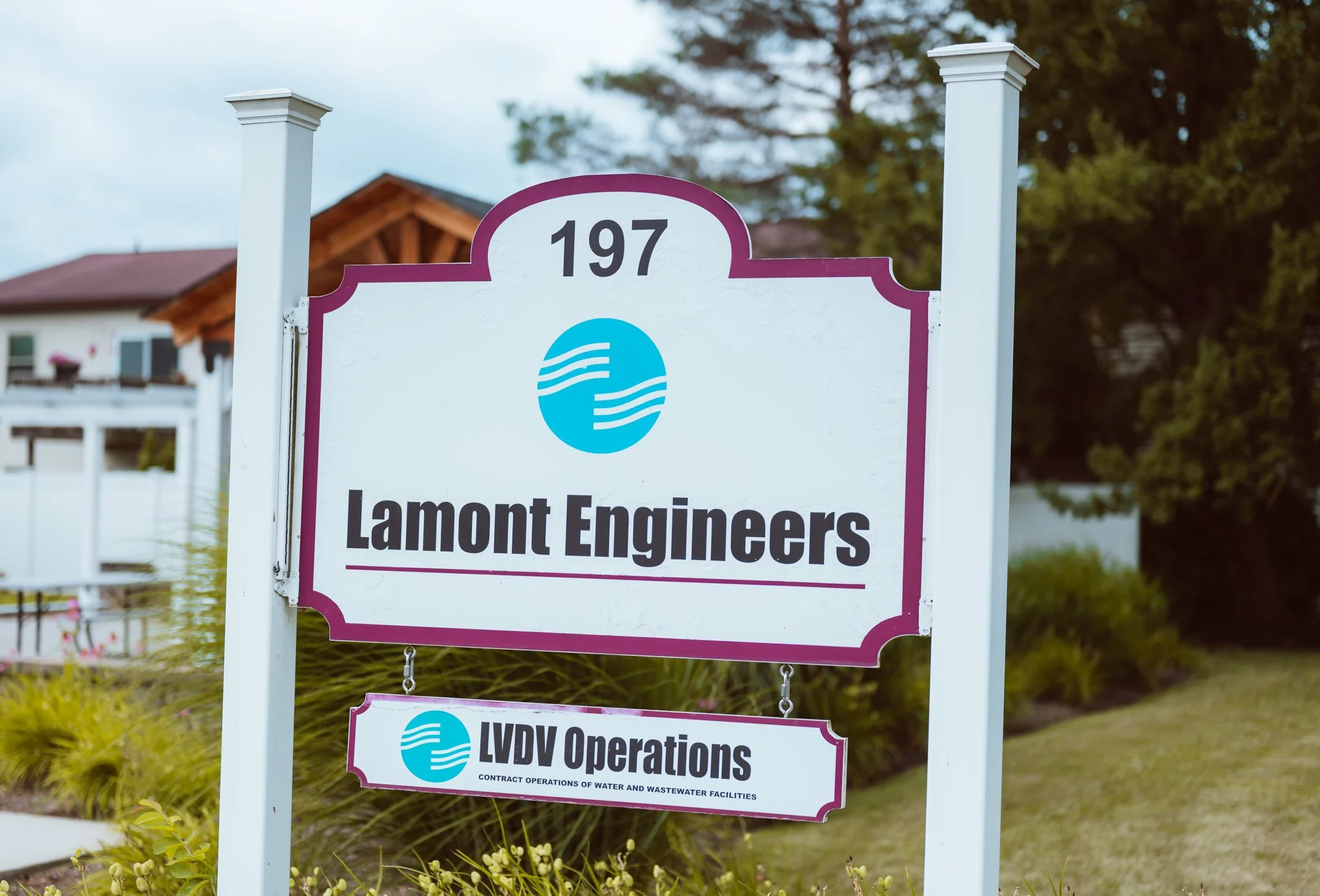
Address: 197 NY-10, Cobleskill, NY 12043
Phone: (518) 234-4028
LVDV Operations: A Lamont Engineers subsidiary managing operations at 34 water and wastewater facilities across the region—ensuring rural systems run safely and efficiently.
Financial
Funding Support: Lamont Engineers regularly helps municipalities secure grants and public funding to finance critical infrastructure like water, wastewater, and emergency facilities.
Budget-Conscious Design: The team is known for guiding clients through practical, cost-effective solutions, always balancing long-term value with immediate community needs.
Intellectual/Industry
Carlisle Firehouse Project
SUNY Cobleskill
Cornell University
Clarkson University
2023 & 2024 Albany Business Review Best Places to Work
Digital
Website
Start A Project!
For more information contact marketing@seecny.org.
To read more ROOTED stories click here.