
Wonder Wall: America’s Last Hand-Printed Studio Lives on In Sharon Springs
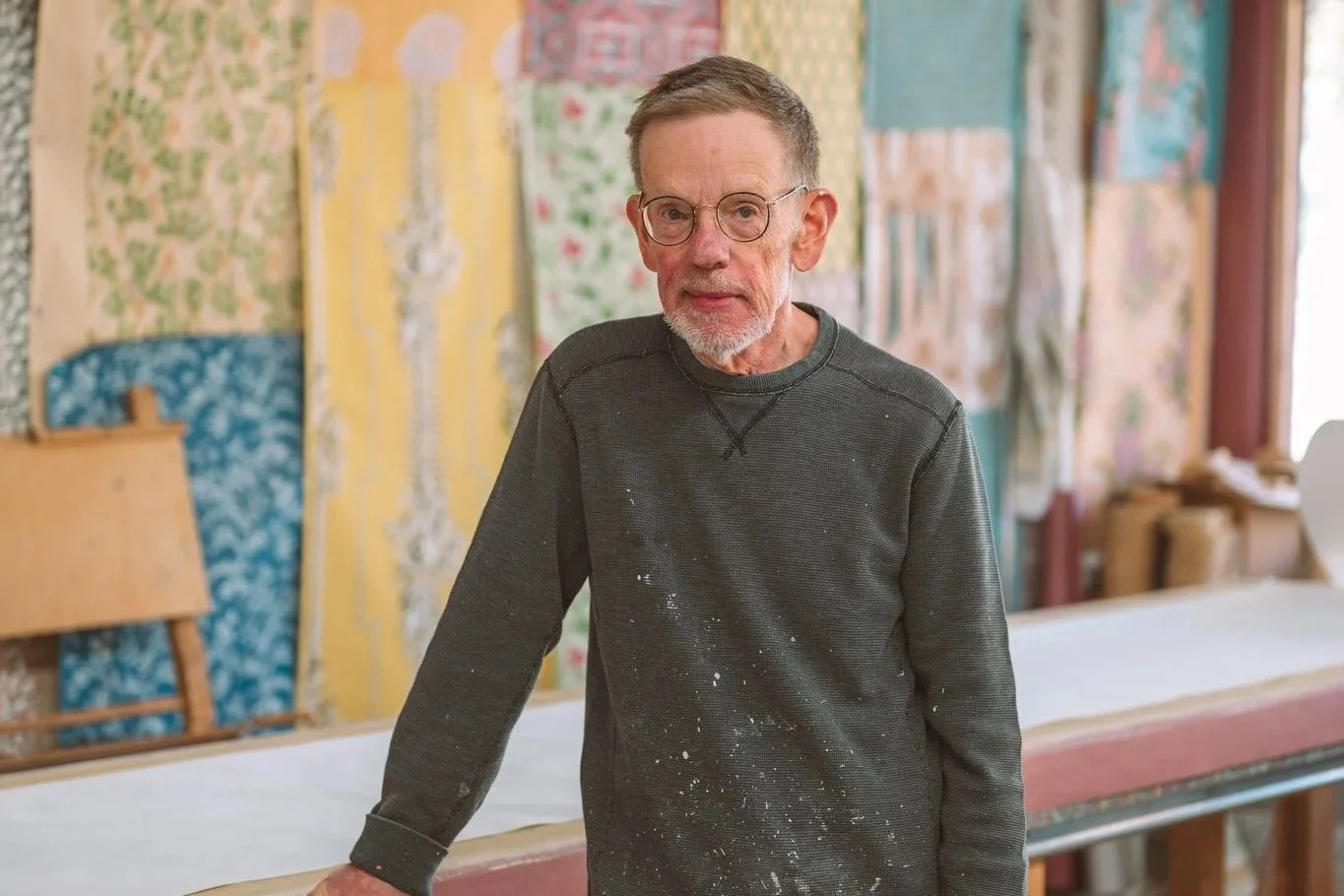
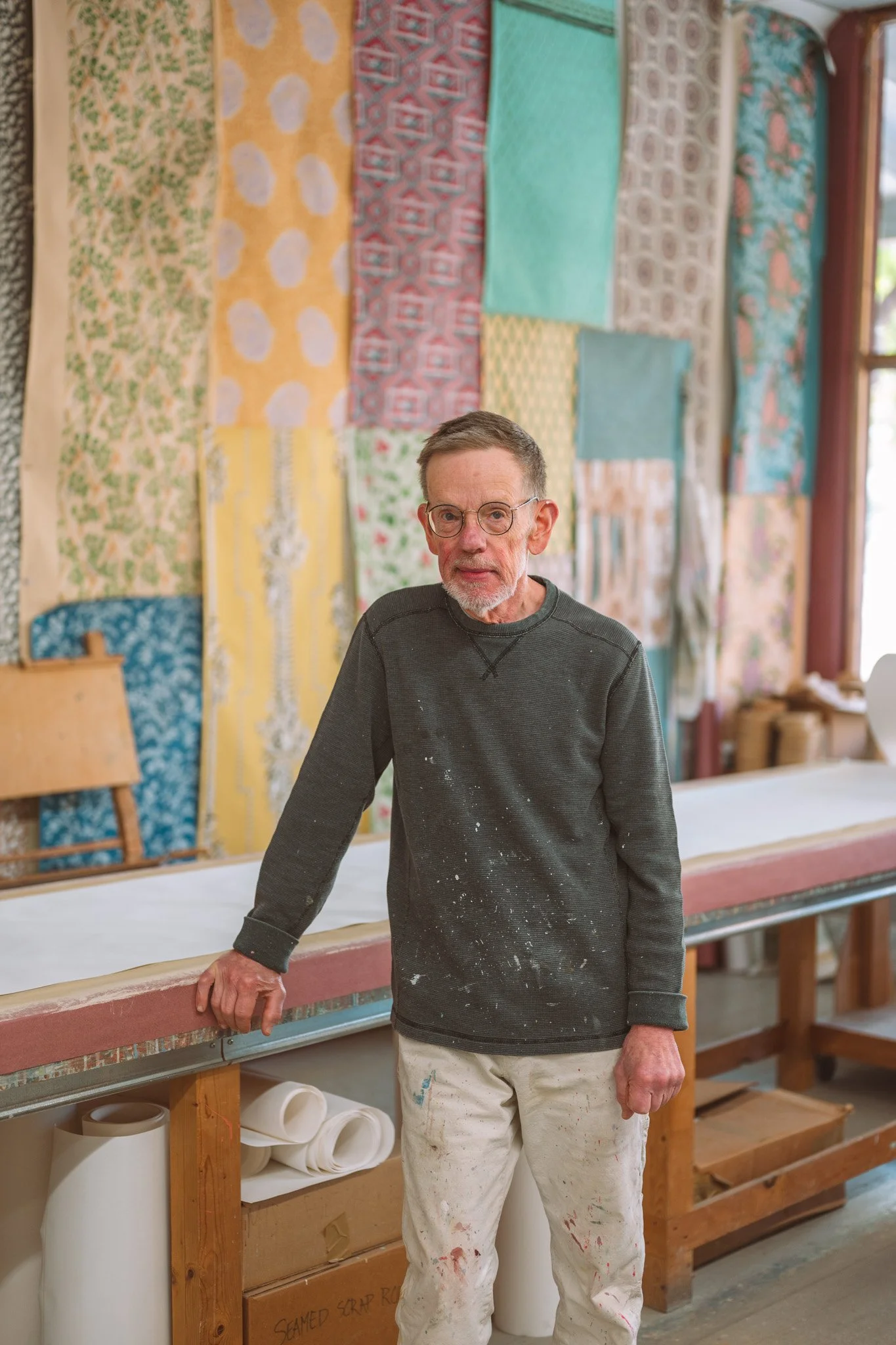
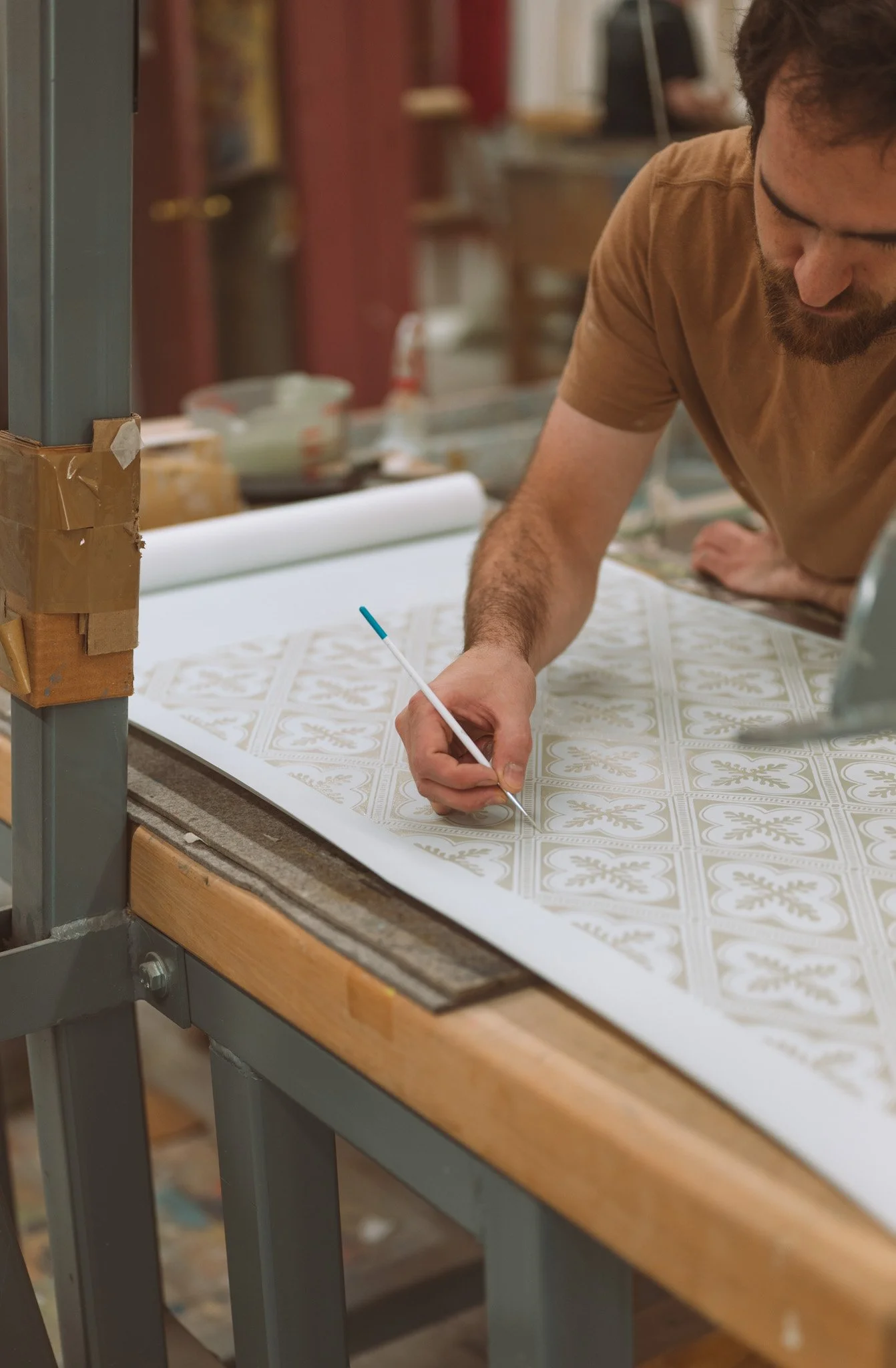
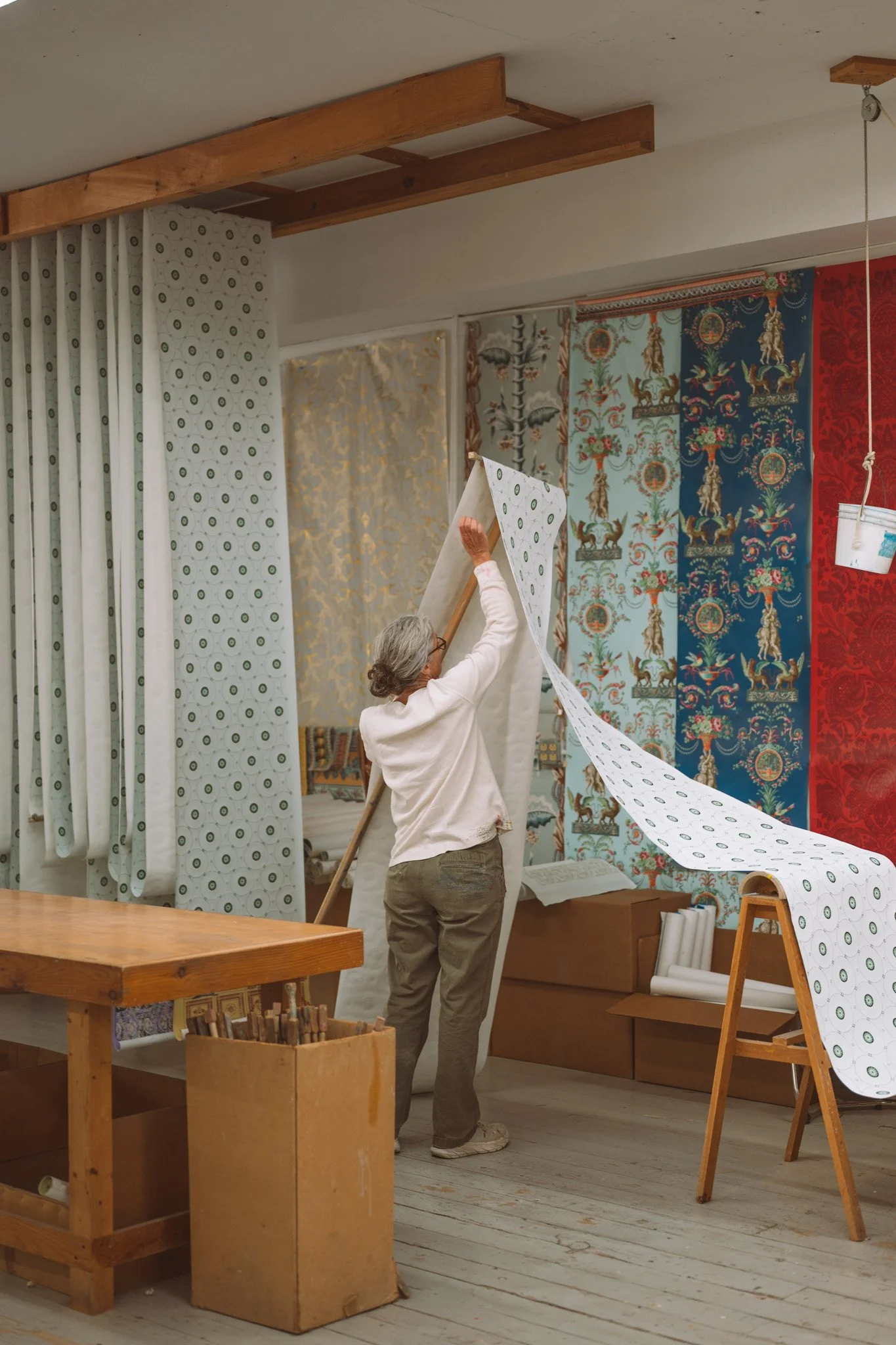
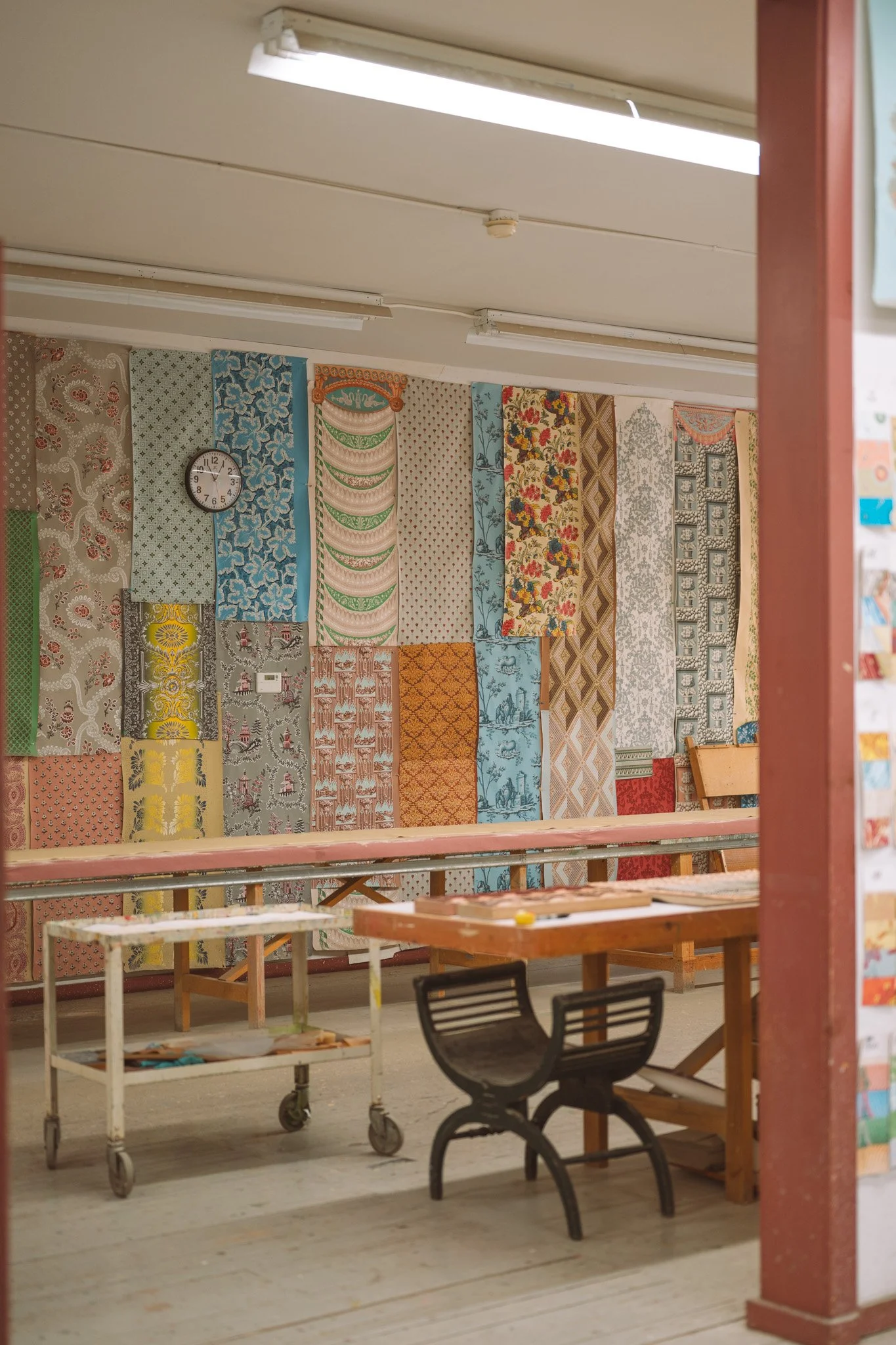
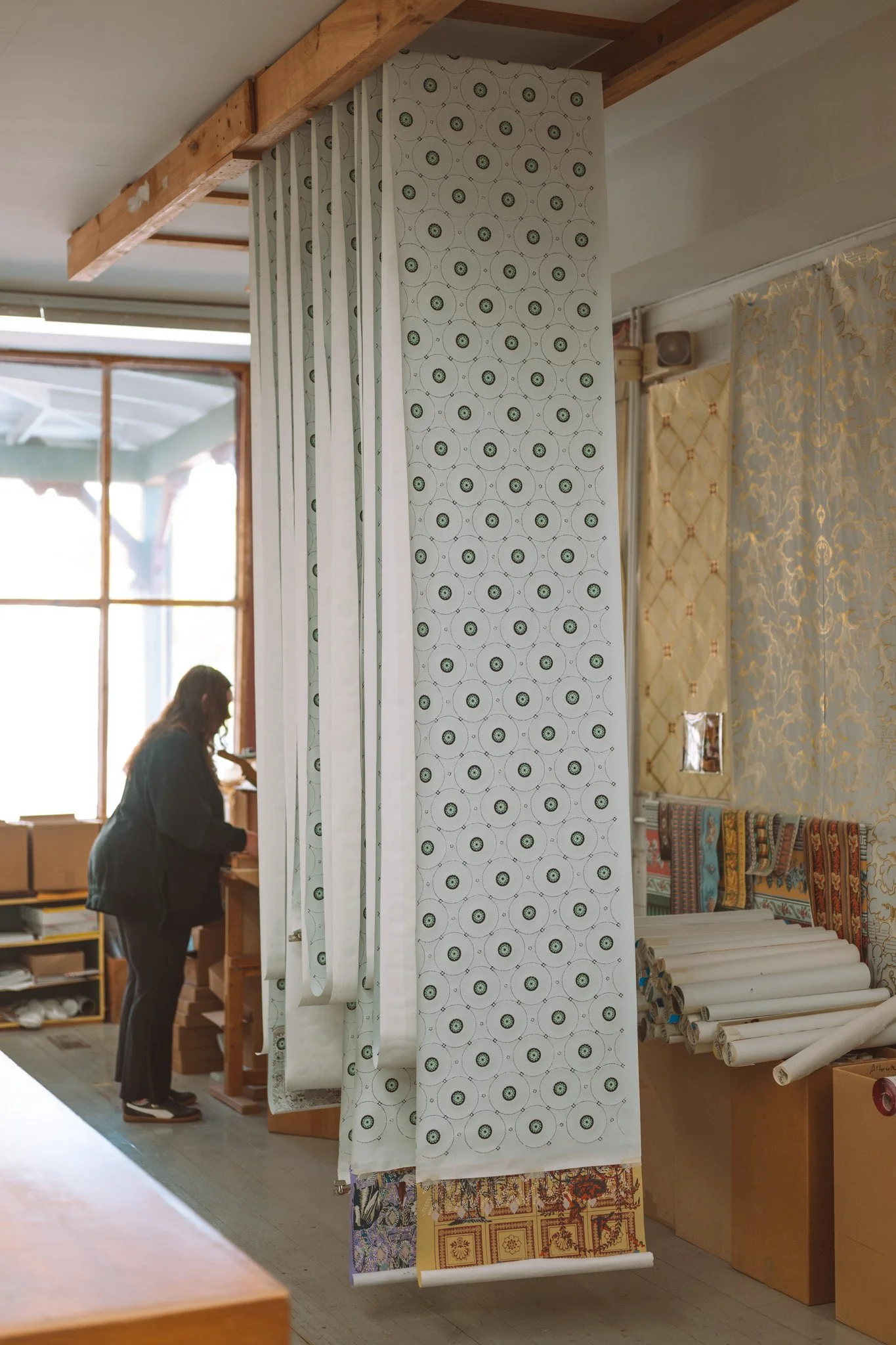
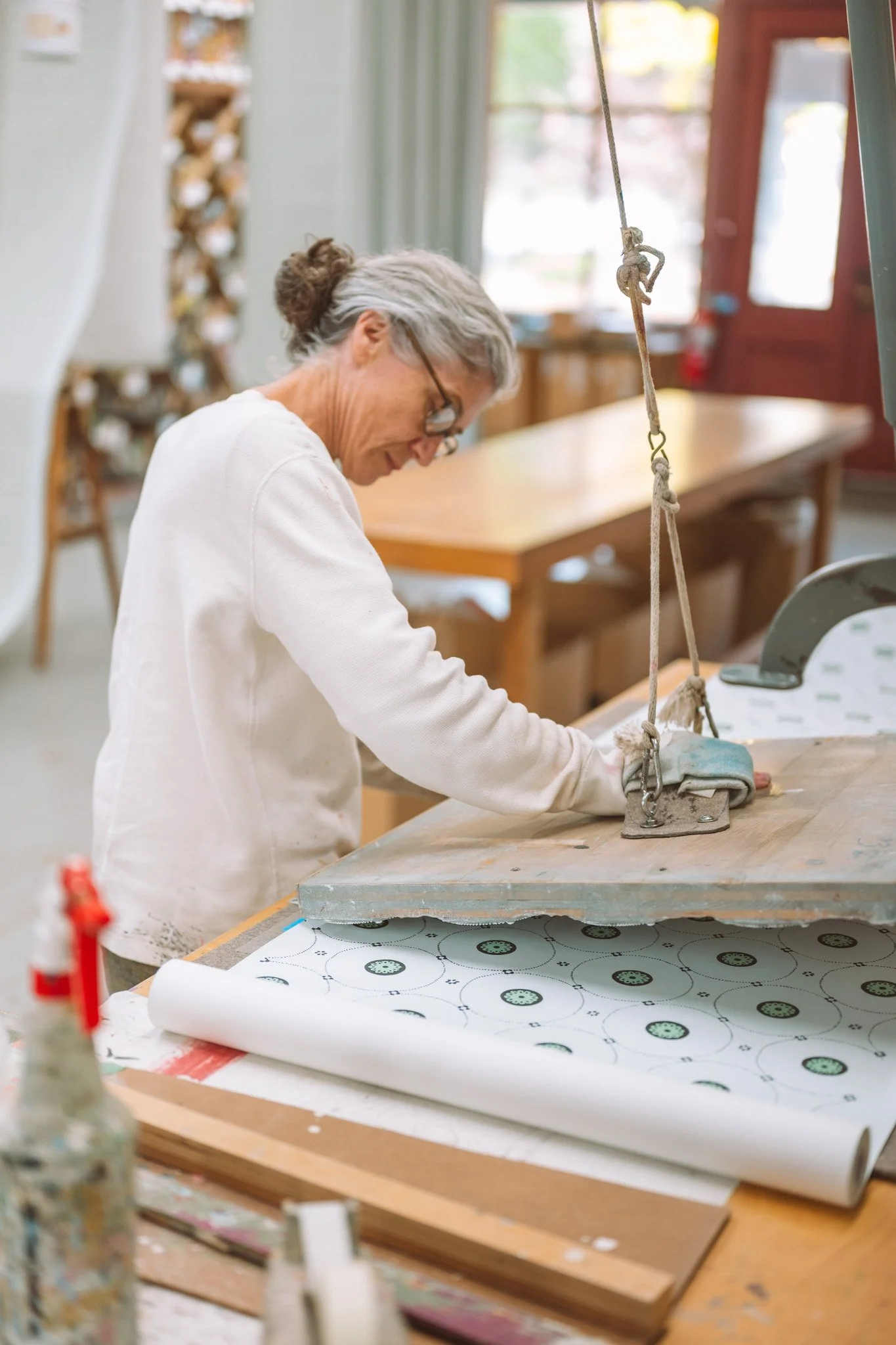
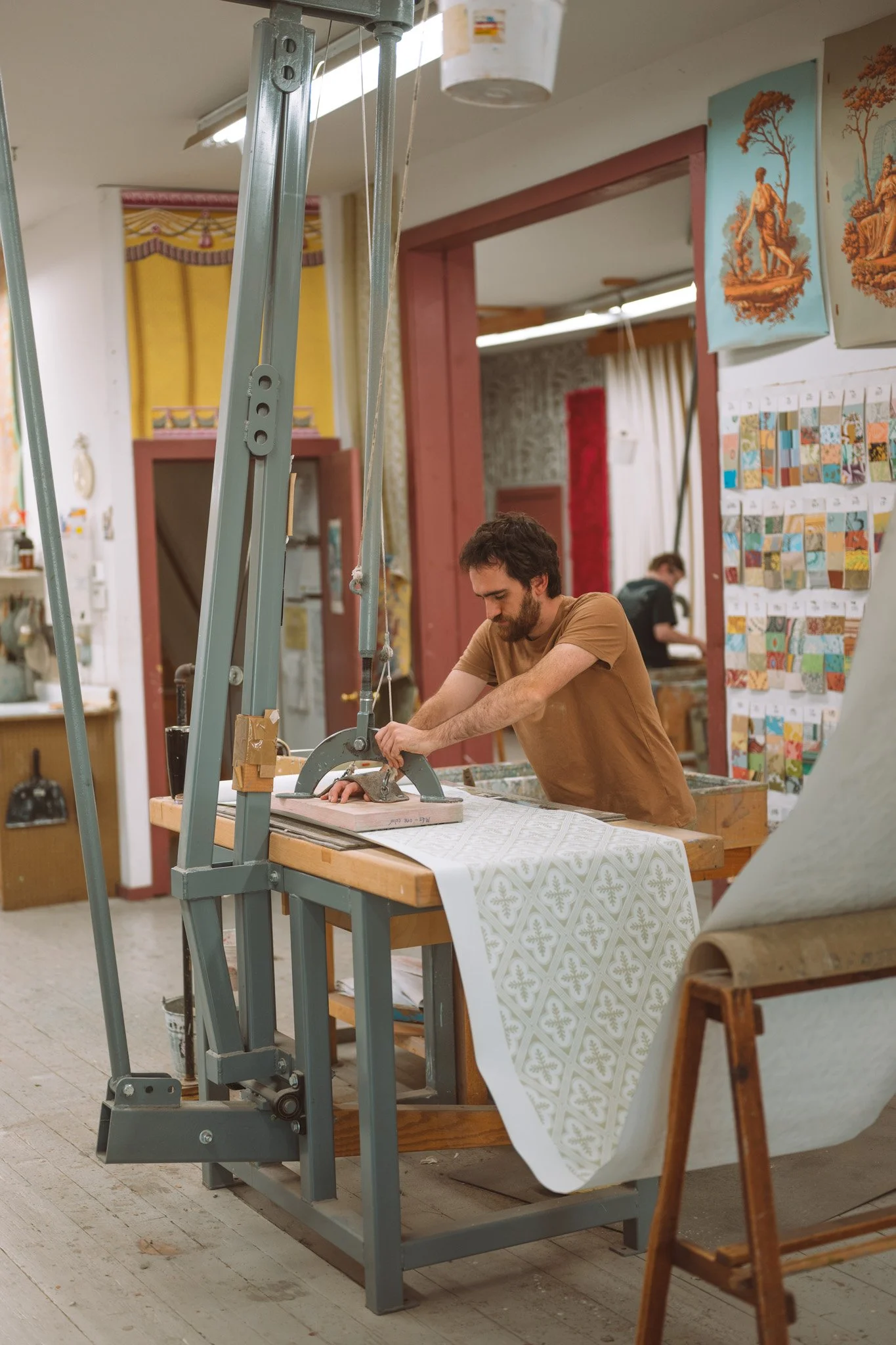
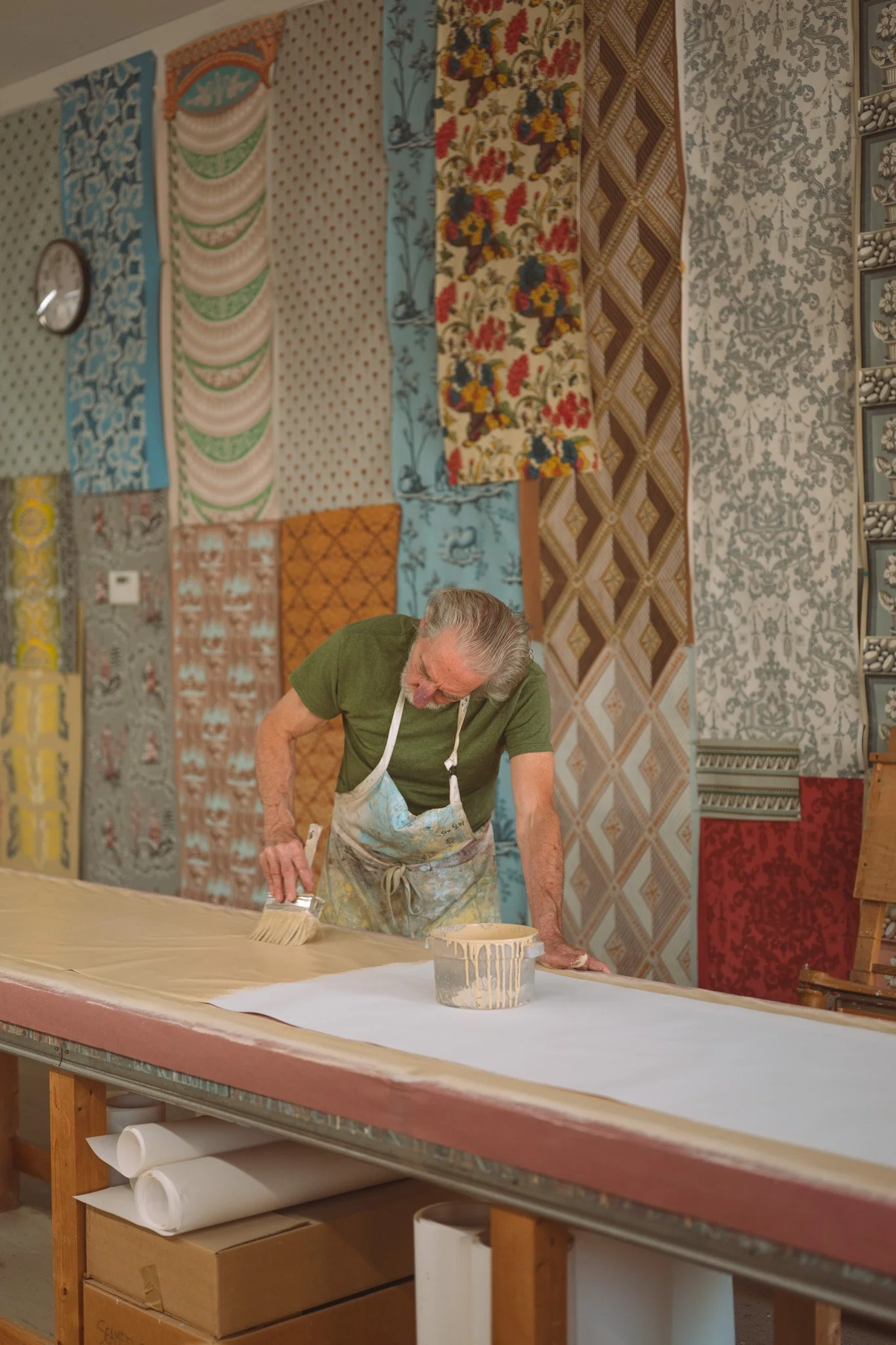
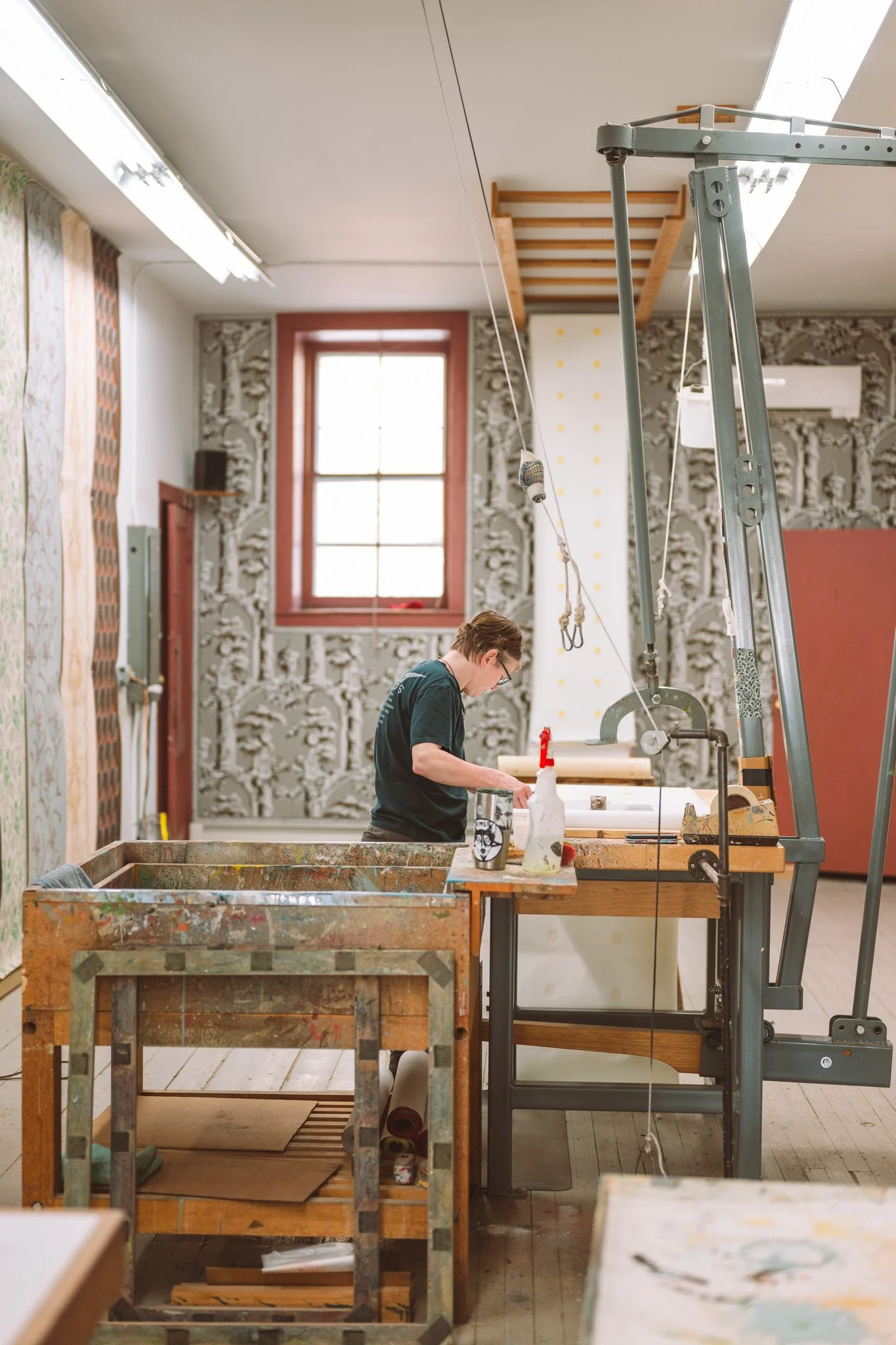
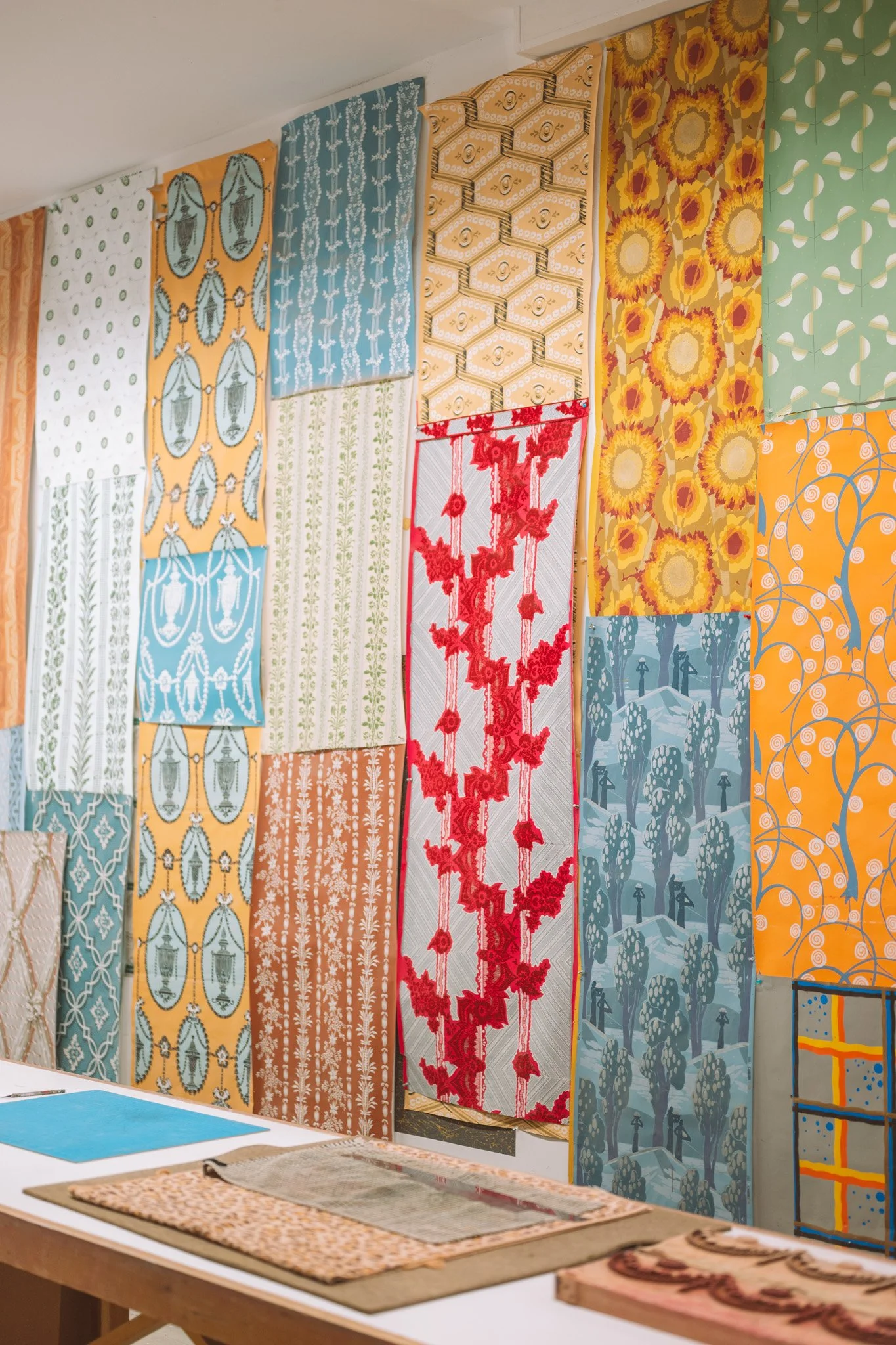
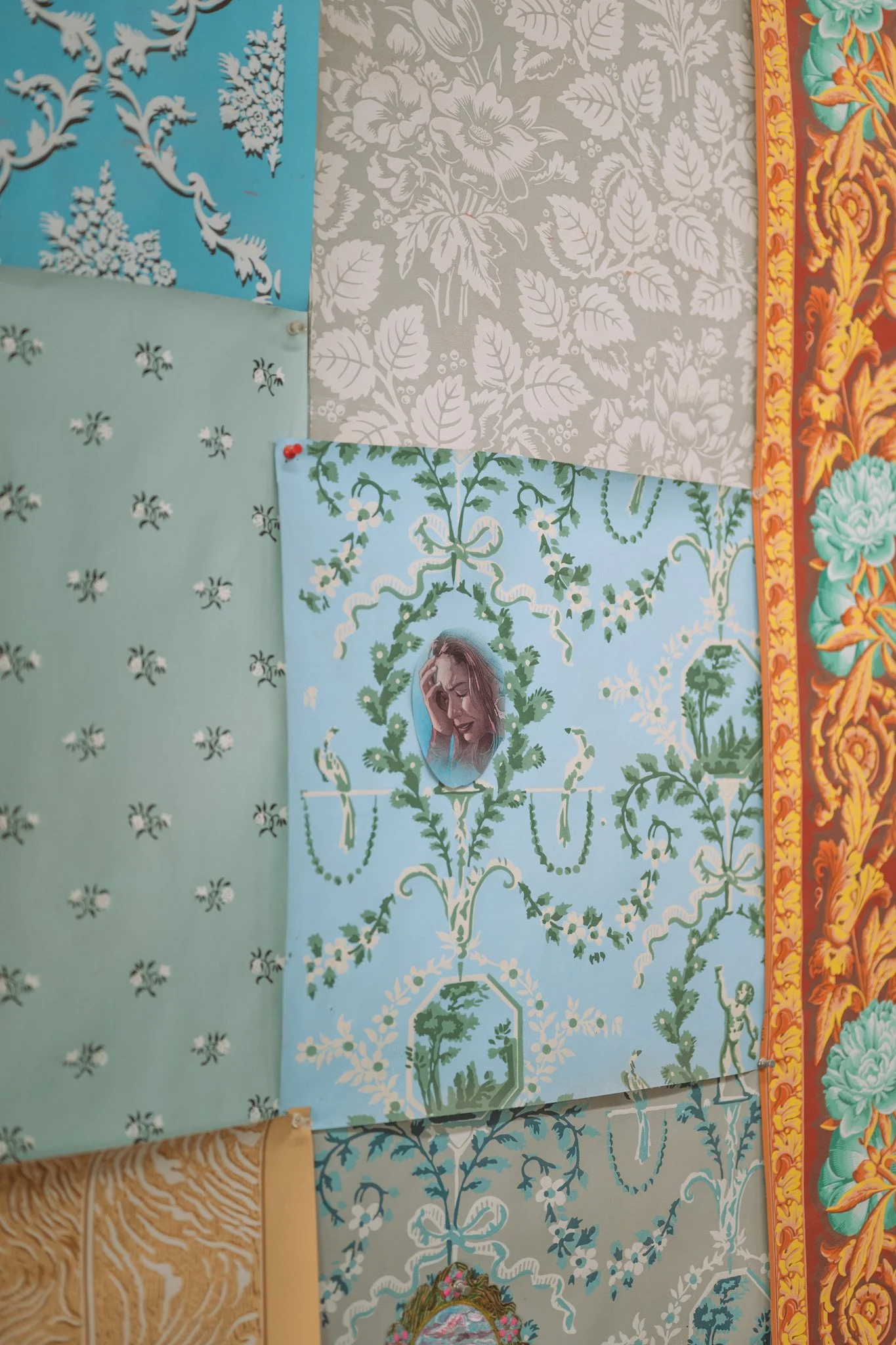
If you stand at the corner of uptown and downtown Sharon Springs and peer through the tall glass panels at 102 Main Street, you might think you’re looking into an art installation. Rolls of painted paper hang from ceiling rungs like soft banners, casting shadows across standing workstations below. Bright natural light pours in reflecting the rainbow of unique patterns and colors that hug the once barren white walls. At one station, an artist dips a wooden block into paint soaking in a felt cloth. At another, a hand brush adds delicate detail to a centuries-old design.
But this isn’t a museum or a gallery. It’s a workshop — and what’s happening inside is something astonishingly rare.
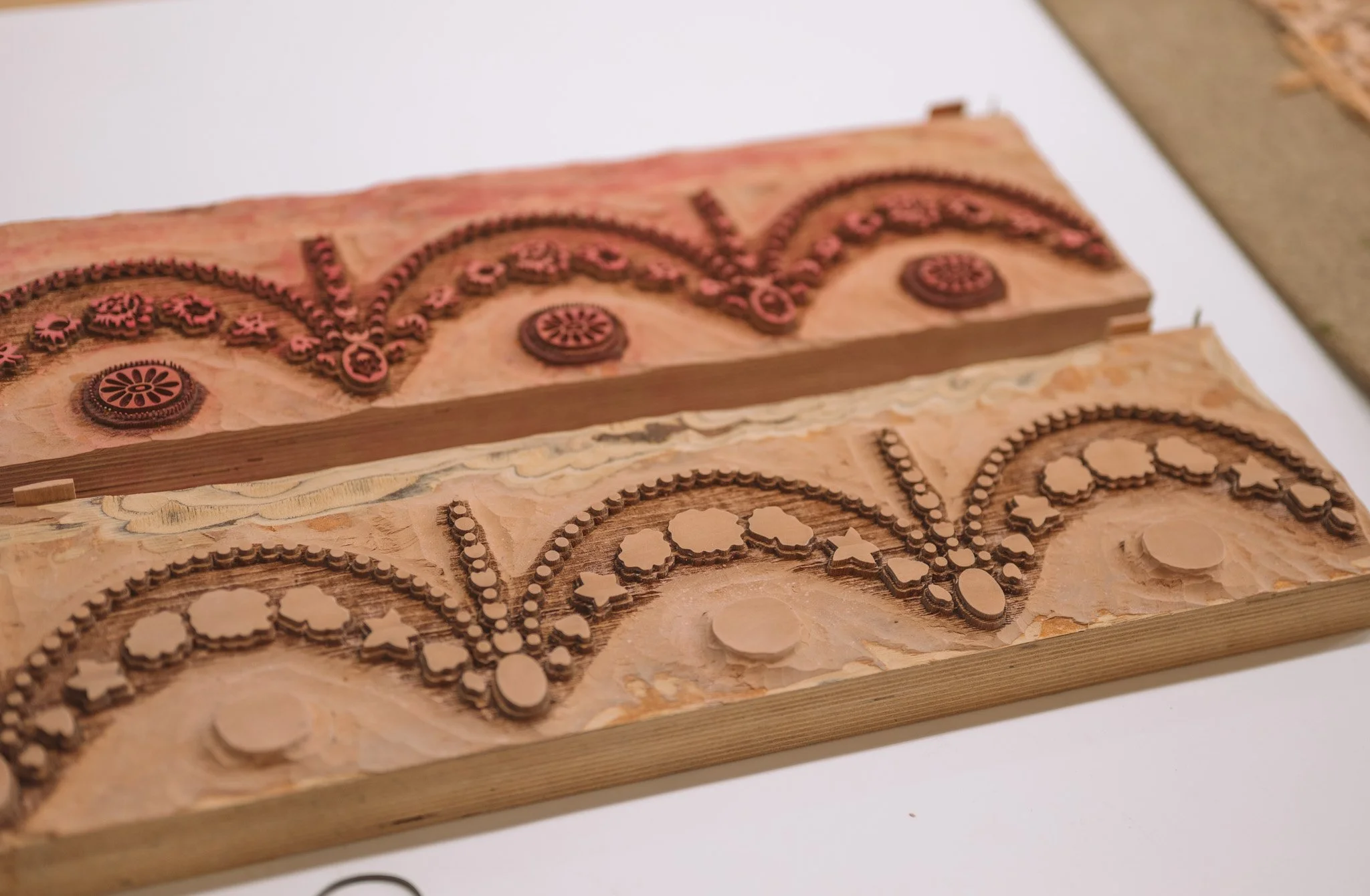
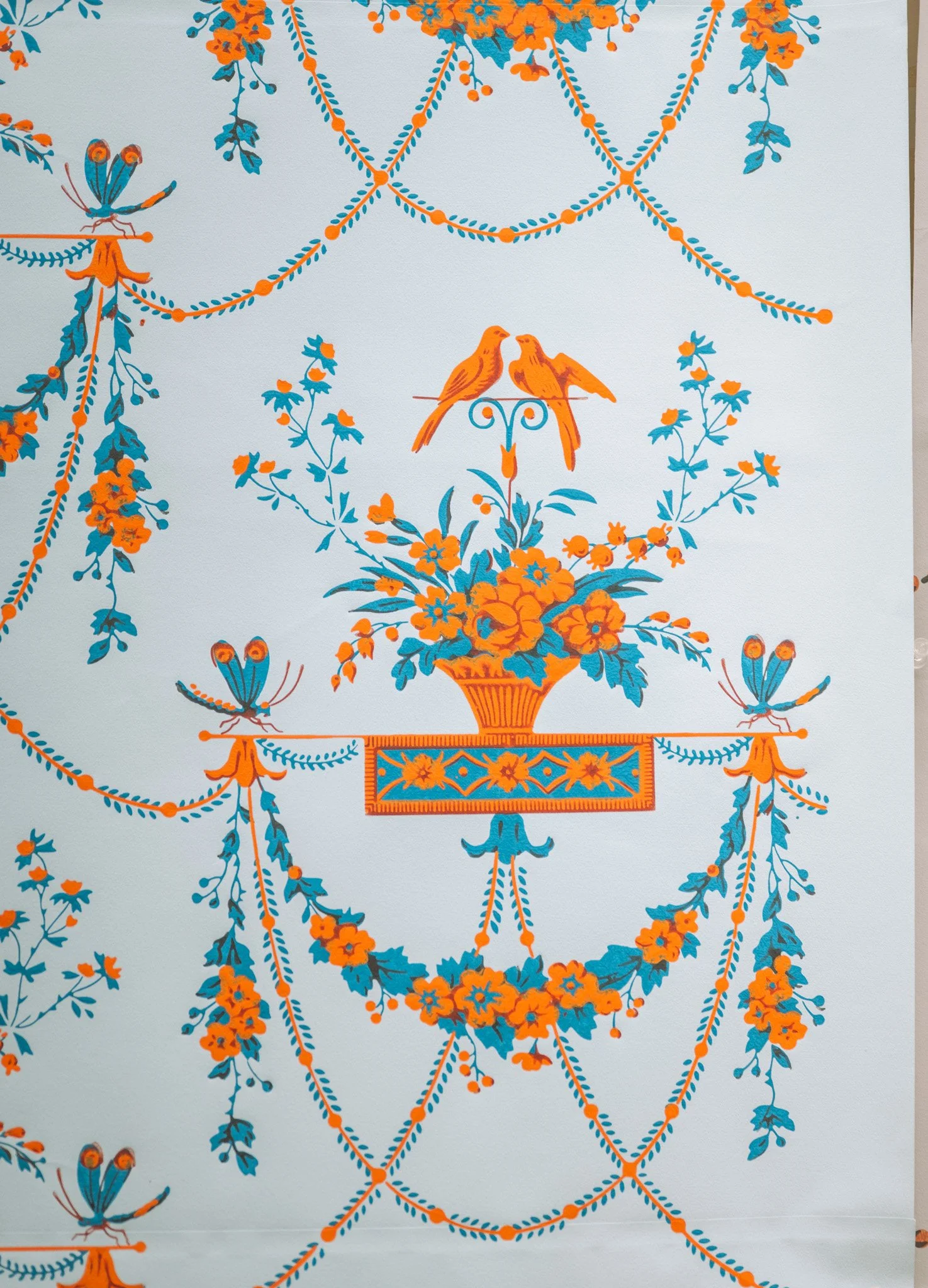
This is Adelphi Paper Hangings, the only studio in the United States still producing hand block-printed wallpaper using 18th- and 19th-century techniques. No shortcuts. No automated machines. Just carved wood blocks, hand-mixed paint, and a team of artists quietly preserving one of the rarest art forms still in practice today.
“We concentrate on block printing historic patterns, they date from 1740 up to 1840, which was kind of the golden age for block printing wallpaper,” co-founder, Steve Larson says.
Steve is the co-founder, and reluctant historian. “You’ve got wood, paint, and paper. That’s all you need,” he says with a shrug. But for the world-class designers and museums who order from Adelphi, those simple ingredients add up to something quite extraordinary.
Steve didn’t grow up around historic homes, Federal-era design or set out to become “the wallpaper guy.” He was raised in Seattle, went to art school out West, and landed in New York City in the late ’70s — working in museums like the Solomon R. Guggenheim Museum, experimenting with sculpture, and navigating the city's creative and chaotic world for nearly a decade. “But we’d had enough.”
“We” meant Steve and his husband, John Townsend. Looking for quieter skies and some land, they drew a 20-mile radius, then 30, 40, and 50-mile radius around Albany — where John had landed a job at the New York State Library. That circle eventually brought them to the western-most part of Schoharie County, where they bought a hilltop property and built their own timber-framed, solar-powered, off-grid home by hand. “We’ve been here 32 years,” Steve says. “It’s what we always dreamed of.”
Early on, Steve stitched together a life of rural ingenuity: school bus driver and lumberyard sales desk — jobs that provided health insurance and left space for creative work on the side. “I was making papier-mâché sculptures covered in old ’50s and ’60s wallpaper,” he says.
Then one fall afternoon, at the Farmers’ Museum in Cooperstown, everything changed.
Before ending their stroll through the Museum, he and John happened upon a newly developed demonstration space. “They were block printing 18th-century wallpaper,” he remembers. “It called to me.” Steve started working at the museum and joined the team under Chris Ohrstrom who had launched the demo program. Within two years, Steve and Chris took the leap, founding Adelphi Paper Hangings in 1999 in Milford, NY. By 2001, they’d moved operations to 102 Main Street in Sharon Springs, where the studio remains today.
What started as an experiment became a legacy. “We thought it might last five years,” Steve says. “But it just kept going.”
Adelphi’s reach is global. Today, Adelphi’s wallpapers line the halls of Mount Vernon, Monticello, the Lincoln Bedroom at the White House, grace the pages of design and fashion magazines and even appear on film sets like that of Emma. Clients come from all over the world — Los Angeles, London, Lisbon.
Together, Michele Farwell (23 years), Jenn Hanford (22 years), David Cocco (18 years), Jessica Marx (7 years) and Jack Bryant (6 years) — have built something rare: a workplace where traditional skills are passed hand to hand, year after year. No manuals. Little automation. Just people who care deeply about doing things well.
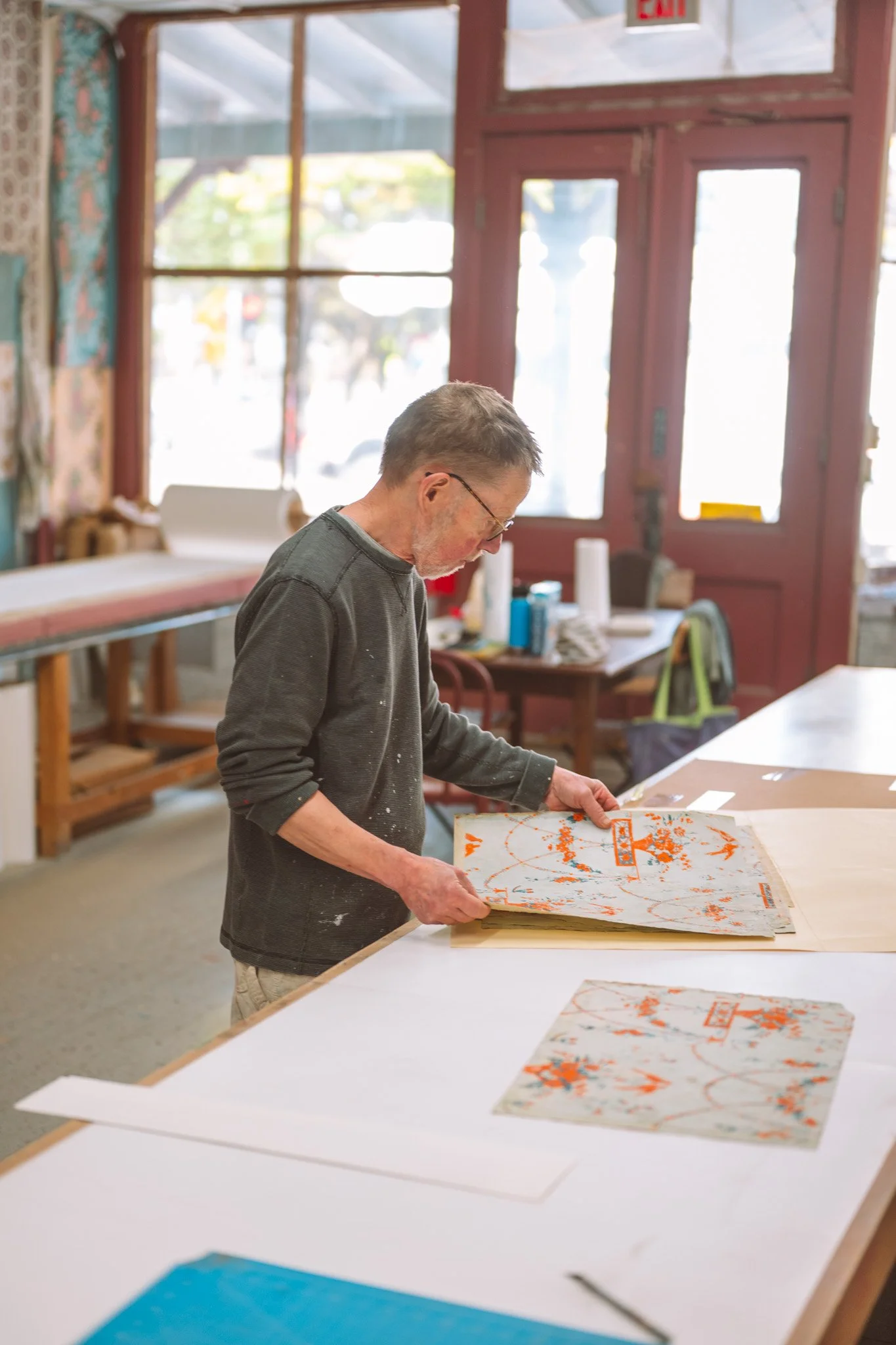
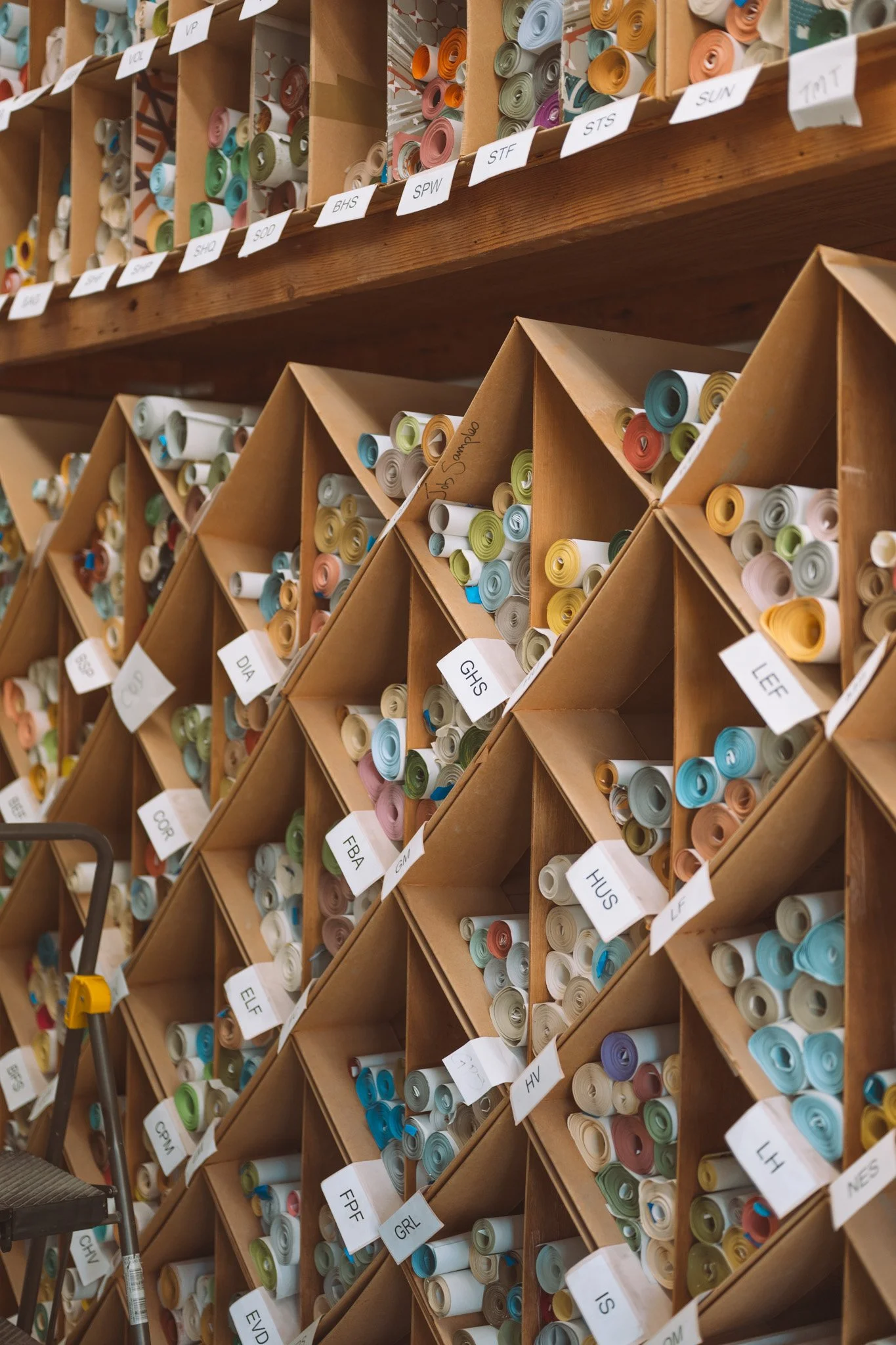
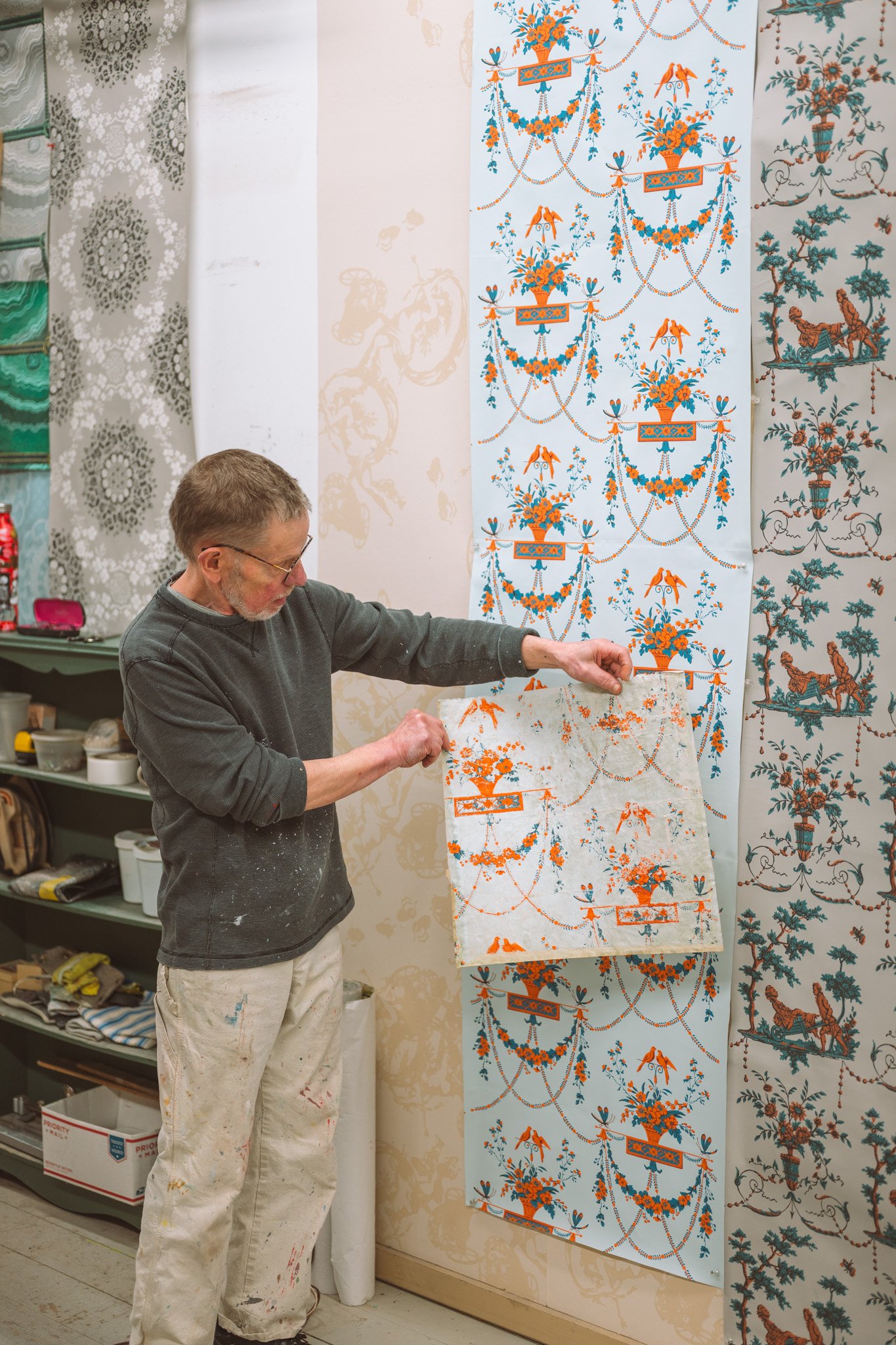
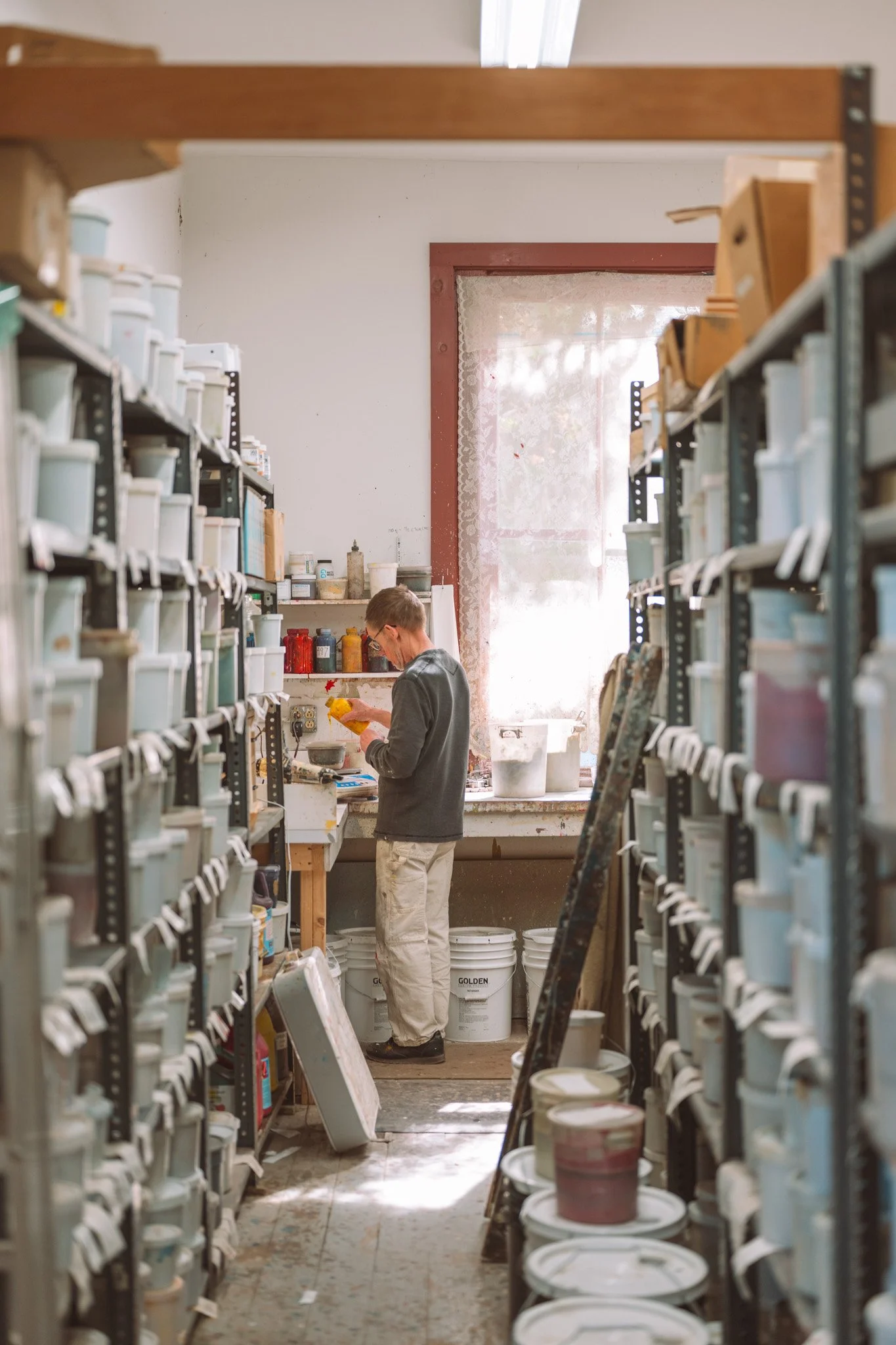
Each design starts with a historic reference — some sourced from institutions like Colonial Williamsburg, the Smithsonian, and Cooper Hewitt, a photograph, even a scrap found in a barn. Michele and Jenn redraw the pattern by hand, carefully preserving its character and quirks. Then, each color in the design gets its own wood block, laser-cut or 3D printed, which are eventually stored in the basement. The paint —a chalk-based distemper paint, which was traditionally bound with rabbit-skin glue (now replaced with more stable acrylic) — is hand-mixed for every order. A single order (10–12 rolls) can take 3-4 days and dozens of passes.
“It’s a flow,” Steve says. “A meditation for some.”
You’d never know the level of precision in their craft just by walking past the quiet storefront. The building itself is undergoing an historic face lift supported by the NY Forward program. Restoration of original panels, shutters, and historic facade details were recently uncovered during construction — a fitting evolution for a business built on honoring the past.
Retirement is heavy on Steve’s mind these days but not about closing up shop. “I never had a five-year plan,” he says. “But I always wanted to do something that mattered.” His story, like the wallpapers he prints, is one of careful layering: hand-built homes, handmade prints, a handcrafted life. The rhythm he started — block to paper, hand to paint, story to surface — continues.
In that rhythm, in that quiet dedication, in that glimmering light of an art installation in motion, the wonder wall will endure. Because when the world rushes forward, doing things the old way, the long way, the thoughtful way, the human way, is its own kind of rooted and radical. That’s the legacy Steve, the self-proclaimed ‘technophobe,’ leaves behind — not just in the patterns on the wall, but in the way they were made.
ROOTED
Interviewed and Authored by SEEC Associates, September 2025
Photos taken by Roslyn Rose Photography
RESOURCE BIN
Human
Steve Larson — Founder/Owner, Adelphi Paper Hangings
Chris Ohrstrom — Business partner, co-founder
Team: Michele, Jenn, David, Jack — long-tenured hand and block printers & Jessica Marx handling marketing & showroom relations.
Physical Location
Adelphi Paper Hangings — 102 Main Street, Sharon Springs, NY
Financial
NY Forward program — direct grant for building renovation
Intellectual/Industry
Rural ingenuity: Health benefits via local jobs, making art accessible in remote areas
Longevity & team culture: Over two decades of artistic dedication and craft preservation
Museums worked with: Colonial Williamsburg, Mount Vernon, Smithsonian, CooperHewitt, Historic New England (patterns and design sources)
Design era: Hand block-printing (c. 1740–1840 golden age of wallpaper) versus later machine-printed patterns
Digital
For more information contact marketing@seecny.org.
To read more ROOTED stories click here.